How to Build a Base in StarRupture
Step-by-Step Guide for Beginners
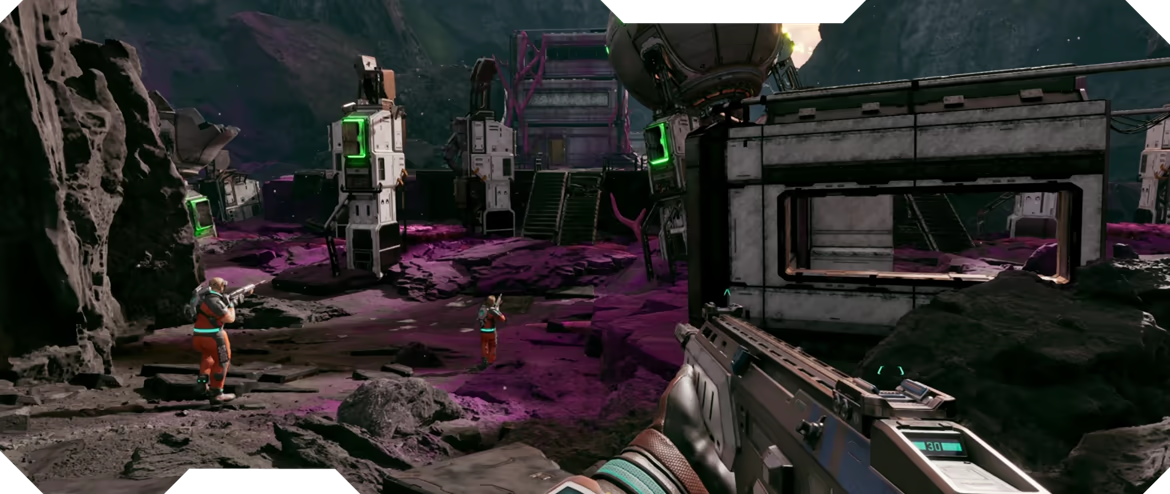
Building a base is one of the most important aspects of StarRupture. Your base serves as your safe haven, crafting hub, and storage center. A well-designed base can mean the difference between thriving and barely surviving in this harsh alien world.
This guide will walk you through everything you need to know about base building: from choosing the perfect location to designing efficient layouts, avoiding common mistakes, and defending against hostile creatures. Whether you're building your first shelter or planning an advanced compound, this guide has you covered.
Base Building Basics
Before you start building, you need to understand the fundamental mechanics of base construction in StarRupture.
What You Need to Start Building
To begin constructing your first base, you'll need:
- Building Tool: Craft a basic hammer (requires 5x Wood, 2x Stone)
- Foundation Materials: Wood planks or stone blocks
- Wall Materials: Wood, stone, or metal depending on tier
- Workbench: For crafting advanced building components
Building Tiers Explained
StarRupture features three building tiers, each offering better protection and durability:
| Tier | Materials | Durability | Best For |
|---|---|---|---|
| Tier 1 - Wood | Wood, Plant Fiber | Low | Early game, temporary shelters |
| Tier 2 - Stone | Stone, Clay, Wood | Medium | Mid game, permanent bases |
| Tier 3 - Metal | Metal Plates, Alloys | High | Late game, fortified compounds |
Essential Base Components
Every functional base needs these core elements:
- Foundation: Provides stability and prevents structure collapse
- Walls: Protect from weather and enemies
- Roof: Shields from rain and aerial threats
- Door: Secure entry point (always use lockable doors)
- Storage: Chests and containers for items
- Crafting Stations: Workbench, furnace, etc.
- Bed: Sets your respawn point
Pro tip: Always place a bed first to set your spawn point before extensive building.
map Choosing the Perfect Base Location
Location is everything. A good spot can save you hours of travel time and provide easy access to resources.
Key Factors to Consider
droplet 1. Water Access
Water is essential for survival. Build within 2-3 minutes of a reliable water source.
- Rivers provide unlimited clean water
- Lakes are good but check water quality
- Avoid areas where water is contaminated
See our water guide for finding water sources.
2. Resource Proximity
Build near essential resources to minimize travel time:
- Wood: Forest areas for constant wood supply
- Stone: Rocky areas or mountains
- Metal Ores: Near copper or iron deposits
- Food Sources: Areas with wildlife and plants
3. Terrain and Defense
Choose defensible terrain:
- Flat Ground: Easier to build, requires less materials
- Elevated Areas: Better visibility, easier to defend
- Natural Barriers: Cliffs, rivers, or rocks provide protection
- Avoid Valleys: Can flood and are hard to defend
4. Biome Considerations
Different biomes offer different advantages:
| Biome | Pros | Cons |
|---|---|---|
| Grasslands | Flat terrain, abundant resources, safe | Few natural defenses |
| Forest | Unlimited wood, good cover | Limited visibility, more predators |
| Mountains | Defensible, rich in stone and ore | Difficult terrain, cold weather |
| Desert | Flat, good visibility | No water, extreme heat, limited resources |
| Coast | Water access, fishing, scenic | Limited expansion space, storms |
Best Starting Locations
For beginners, these locations offer the best balance:
- Grassland near River: Easy resources, water access, safe
- Forest Edge: Wood supply with open space for building
- Small Hill near Water: Defensible with good visibility
Check our map guide for specific coordinates of recommended base locations.
Step-by-Step: Building Your First Base
Follow these steps to construct a functional starter base that will keep you safe and organized.
Step 1: Gather Initial Materials
Before you start building, collect these materials:
- 100x Wood (from trees)
- 50x Stone (from rocks)
- 20x Plant Fiber (from bushes)
- 10x Thatch (from grass)
This is enough for a small 4x4 starter shelter.
Step 2: Craft Your Building Tool
- Open your crafting menu (Tab key)
- Find "Basic Hammer" in the tools section
- Craft it using 5x Wood and 2x Stone
- Equip the hammer to your hotbar
Step 3: Place Foundation
- Equip your hammer
- Right-click to open building menu
- Select "Wood Foundation"
- Place foundations in a 4x4 grid (16 foundations total)
- Ensure foundations are level and connected
Important: Foundations must be on relatively flat ground or they won't snap together.
Step 4: Build Walls
- Select "Wood Wall" from building menu
- Place walls around the perimeter of your foundation
- Leave one space open for a door
- Walls will snap to foundation edges automatically
Step 5: Add Door and Roof
- Select "Wood Door" and place in the wall opening
- Craft a door lock (2x Wood, 1x Stone)
- Install lock on door for security
- Select "Wood Ceiling" and cover the top completely
Always lock your door to prevent other players or creatures from entering.
Step 6: Place Essential Furniture
Now furnish your base with essentials:
- Bed: Place first to set spawn point
- Storage Chest: For organizing items
- Workbench: For advanced crafting
- Campfire: For cooking and warmth
- Light Source: Torch or lantern
Step 7: Add Basic Defenses
Protect your base from threats:
- Build a simple fence around your base (2 blocks high minimum)
- Place spike traps near entrances
- Add torches around perimeter for visibility
- Consider a small watchtower for scouting
grid Base Layout Ideas
A well-organized layout makes your base more efficient and enjoyable to use. Here are proven designs for different playstyles.
Layout #1: The Compact Starter (4x4)
Perfect for solo players just starting out:
- Size: 4x4 foundations (16 squares)
- Layout: Single room with all essentials
- Contains: Bed, workbench, storage, campfire
- Cost: ~100 wood, 50 stone
- Build Time: 15-20 minutes
Best for: First night survival, temporary bases
Layout #2: The Organized Base (6x6)
Divided into functional zones:
- Size: 6x6 foundations with interior walls
- Zones: Sleeping area, crafting area, storage room
- Features: Multiple chests, all crafting stations
- Cost: ~250 wood, 100 stone
- Build Time: 30-40 minutes
Best for: Mid-game solo or duo players
Layout #3: The Compound (Multiple Buildings)
Separate buildings for different functions:
- Main House: Living quarters with beds and storage
- Workshop: All crafting stations and materials
- Warehouse: Large storage facility
- Farm Area: Crops and animal pens
- Defense Tower: Elevated position for scouting
Best for: Late game, multiplayer groups
Layout #4: The Fortress
Maximum security design:
- Core: Central keep with all essentials
- Walls: Double-layer perimeter walls
- Towers: Corner watchtowers with weapon placements
- Moat: Defensive trench or spike pit
- Gates: Reinforced entrance with kill zone
Best for: PvP servers, high-threat areas
Layout Tips
- Leave space between buildings for expansion
- Create clear pathways between functional areas
- Place frequently used items near the entrance
- Keep crafting stations together for efficiency
- Build storage rooms with easy access
- Add windows for natural light and visibility
alert Common Base Building Mistakes
Avoid these common errors that new players make when building their first base.
x Mistake #1: Building Too Small
Many players build a tiny base and quickly run out of space for storage and crafting stations.
Solution: Start with at least 4x4 foundations. Plan for expansion by leaving space around your base.
x Mistake #2: No Foundation
Building directly on the ground without foundations leads to unstable structures that can collapse.
Solution: Always start with foundations. They provide stability and make building much easier.
x Mistake #3: Forgetting to Lock Doors
Unlocked doors allow other players and creatures to enter your base freely.
Solution: Craft and install door locks immediately. Set a PIN code you'll remember.
x Mistake #4: Poor Location Choice
Building far from water or resources wastes hours of travel time.
Solution: Scout the area first. Build near water and key resources. Check our map guide for ideal locations.
x Mistake #5: No Roof
Leaving your base open to the sky exposes you to weather damage and aerial attacks.
Solution: Always build a complete roof. It protects from rain, heat, and flying enemies.
x Mistake #6: Not Placing a Bed First
If you die before placing a bed, you'll respawn at the default spawn point, far from your base.
Solution: Place and sleep in a bed as soon as you have walls and a door. This sets your spawn point.
x Mistake #7: Building on Uneven Terrain
Trying to build on slopes or hills requires many more materials and creates awkward layouts.
Solution: Find flat ground or use terrain leveling tools. Flat areas are much easier to build on.
x Mistake #8: No Lighting
Dark bases are hard to navigate and more vulnerable to nighttime attacks.
Solution: Place torches or lanterns inside and around your base perimeter.
x Mistake #9: Single Exit Point
Having only one door can trap you inside if enemies block the entrance.
Solution: Build at least two exits. Consider adding a back door or emergency escape hatch.
x Mistake #10: Ignoring Defense
Bases without defenses are easy targets for raids and creature attacks.
Solution: Add walls, traps, and defensive structures early. See defense tips below.
Base Defense Tips
Protecting your base from hostile creatures and other players is crucial for survival. Here's how to build effective defenses.
Basic Defense Layers
Effective base defense uses multiple layers of protection:
Layer 1: Perimeter Fence
- Build a fence 10-15 blocks away from your main structure
- Minimum height: 2 blocks (3 blocks for better protection)
- Use wood for early game, upgrade to stone later
- Add a gate for controlled entry
Layer 2: Traps and Obstacles
- Spike Traps: Place near entrances and weak points
- Pit Traps: Dig trenches around perimeter
- Barbed Wire: Slows down attackers
- Landmines: Late game explosive defense
Layer 3: Walls and Structures
- Build solid walls around your base (no windows on ground floor)
- Use reinforced doors with locks
- Add a second interior wall for critical areas
- Build watchtowers at corners for visibility
Layer 4: Active Defenses
- Turrets: Automated weapon systems (mid-late game)
- Arrow Slits: Safe shooting positions in walls
- Defensive Platforms: Elevated positions for combat
- Alarm Systems: Alert you to intruders
Defense by Threat Type
Against Small Creatures
- Basic fence (2 blocks high) is sufficient
- Spike traps deter most small threats
- Keep perimeter lit to reduce spawns
Against Large Creatures
- Upgrade to stone walls (3+ blocks high)
- Build reinforced gates
- Add turrets or defensive positions
- Create kill zones with multiple trap layers
Against Flying Enemies
- Always build a complete roof
- Add anti-air turrets on towers
- Use netting or spikes on roof
- Keep windows small and protected
Against Other Players (PvP)
- Use metal tier buildings (hardest to break)
- Build multiple layers of walls
- Hide valuable storage in interior rooms
- Add fake storage to confuse raiders
- Build in hidden or hard-to-reach locations
- Use advanced locks and security systems
Essential Defense Structures
| Structure | Purpose | Cost | Effectiveness |
|---|---|---|---|
| Spike Trap | Damages enemies on contact | 5 Wood, 2 Stone | High vs small enemies |
| Watchtower | Elevated scouting position | 50 Wood, 20 Stone | Essential for visibility |
| Auto-Turret | Automated defense | 20 Metal, 10 Electronics | Very high |
| Reinforced Gate | Secure entrance | 30 Metal Plates | High durability |
| Alarm System | Alerts to intrusions | 5 Electronics, 10 Wire | Detection only |
Defense Maintenance
Don't forget to maintain your defenses:
- Repair damaged walls and structures regularly
- Refill turret ammunition
- Replace broken traps after attacks
- Upgrade to stronger materials as you progress
- Check for weak points and reinforce them
Upgrading Your Base
As you progress, you'll want to upgrade your base for better protection and functionality.
When to Upgrade
Consider upgrading when:
- You have excess resources stockpiled
- Your base is frequently attacked
- You've unlocked new building tiers
- You need more space or functionality
- You're preparing for harder content
Upgrade Priority Order
- Doors and Locks: Upgrade first for security
- Walls: Exterior walls protect everything inside
- Storage: More and better storage containers
- Crafting Stations: Advanced stations unlock better items
- Foundations and Roof: Upgrade for stability
- Interior Walls: Upgrade last as they're less critical
Material Upgrade Path
| Component | Wood → Stone | Stone → Metal |
|---|---|---|
| Wall | +50% durability | +100% durability |
| Door | +60% durability | +120% durability |
| Foundation | +40% stability | +80% stability |
| Roof | +45% protection | +90% protection |
Expansion Tips
- Build outward rather than upward for stability
- Add specialized rooms (workshop, armory, greenhouse)
- Create separate buildings for different functions
- Build underground storage for extra security
- Add decorative elements to make it feel like home
Advanced Base Features
Once you've mastered the basics, consider adding these advanced features to your base.
Power Systems
Generate and distribute electricity:
- Generators: Fuel-powered electricity
- Solar Panels: Renewable daytime power
- Wind Turbines: Consistent power in windy areas
- Batteries: Store excess power
- Power Lines: Distribute electricity to buildings
droplet Water Systems
Automate water collection and distribution:
- Well: Unlimited clean water source
- Rain Collectors: Harvest rainwater
- Water Pipes: Transport water to different areas
- Water Purifier: Clean contaminated water
- Storage Tanks: Large water reserves
Farming and Food Production
Grow your own food supply:
- Crop Plots: Grow vegetables and grains
- Greenhouse: Protected farming area
- Animal Pens: Raise livestock for meat and resources
- Irrigation: Automated watering system
- Kitchen: Advanced cooking station
settings Automation Systems
Automate resource gathering and processing:
- Auto-Miners: Gather ore automatically
- Conveyor Belts: Transport items between stations
- Auto-Crafters: Produce items automatically
- Sorting Systems: Organize items into storage
Learn more in our automation guide.
Security Systems
Advanced protection measures:
- Camera System: Monitor base remotely
- Motion Sensors: Detect intruders
- Automated Turrets: AI-controlled defenses
- Blast Doors: Emergency lockdown
- Safe Room: Reinforced panic room
Base Building Resource Guide
Plan your resource gathering with these material requirements for different base sizes.
Small Starter Base (4x4)
| Material | Quantity | Where to Find |
|---|---|---|
| Wood | 100-150 | Chop trees |
| Stone | 50-75 | Mine rocks |
| Plant Fiber | 20-30 | Harvest bushes |
| Thatch | 10-15 | Cut grass |
Medium Base (6x6)
| Material | Quantity | Where to Find |
|---|---|---|
| Wood | 250-350 | Chop trees |
| Stone | 100-150 | Mine rocks |
| Metal Ingots | 20-30 | Smelt ore |
| Clay | 30-50 | Near water sources |
Large Compound (Multiple Buildings)
| Material | Quantity | Where to Find |
|---|---|---|
| Wood | 500-800 | Chop trees |
| Stone | 300-500 | Mine rocks |
| Metal Plates | 100-200 | Craft from ingots |
| Electronics | 50-100 | Craft or loot |
| Concrete | 200-300 | Craft from stone and clay |
Check our resource farming guide for efficient gathering strategies.
Quick Base Building Tips
- Start small, expand later: Build a basic shelter first, then expand as you gather more resources
- Location matters: Choose a spot near water and resources before building
- Always use foundations: They provide stability and make building much easier
- Lock everything: Doors, chests, and crafting stations should all be locked
- Place a bed immediately: Set your spawn point as soon as you have walls
- Build multiple exits: Don't trap yourself with only one door
- Light up your base: Torches prevent mob spawns and help navigation
- Plan for expansion: Leave space around your base for future growth
- Upgrade gradually: Replace wood with stone, then metal as you progress
- Add defenses early: Basic walls and traps prevent most early threats
- Organize storage: Label chests and group similar items together
- Build a watchtower: Elevated positions help spot threats early
- Keep backup supplies: Store extra building materials for repairs
- Test your defenses: Walk around your base looking for weak points
- Join a community: Building near other players provides mutual protection
Related Guides
Expand your StarRupture knowledge with these related guides:
- Beginner's Guide to StarRupture - Essential tips for new players
- Map Guide - Find the best base locations and resource spots
- Resource Farming Guide - Efficiently gather building materials
- How to Get Water - Essential for base location planning
- How to Get Copper - Important for advanced building components
- Automation Guide - Automate your base systems
- Crafting Tips - Learn to craft building materials efficiently
- Best Weapons Guide - Defend your base effectively
help-circle Frequently Asked Questions
Q: How big should my first base be?
Start with a 4x4 foundation (16 foundations total). This gives you enough space for essential crafting stations, storage, and a bed without wasting too many resources. You can always expand later as you gather more materials.
Q: Can I move my base after building it?
No, you cannot move structures once placed. You'll need to demolish and rebuild if you want to relocate. This is why choosing the right location is critical. Take 10-15 minutes to scout before building your first base.
Q: How do I protect my base from other players?
Lock all doors and storage chests immediately. Build walls around your perimeter and add turrets once you unlock them. Consider building in less obvious locations away from high-traffic areas. Metal walls are much stronger than wood for PvP servers.
Ready to Build Your Base?
Building a base in StarRupture is one of the most rewarding aspects of the game. Start with a simple shelter, choose a good location near water and resources, and gradually expand as you gather materials. Remember to prioritize security with locks, defenses, and multiple exits.
Don't worry about making mistakes - every base is a learning experience. Start small, learn from your errors, and build something amazing. Your perfect base is waiting to be built!
Good luck, and happy building!